
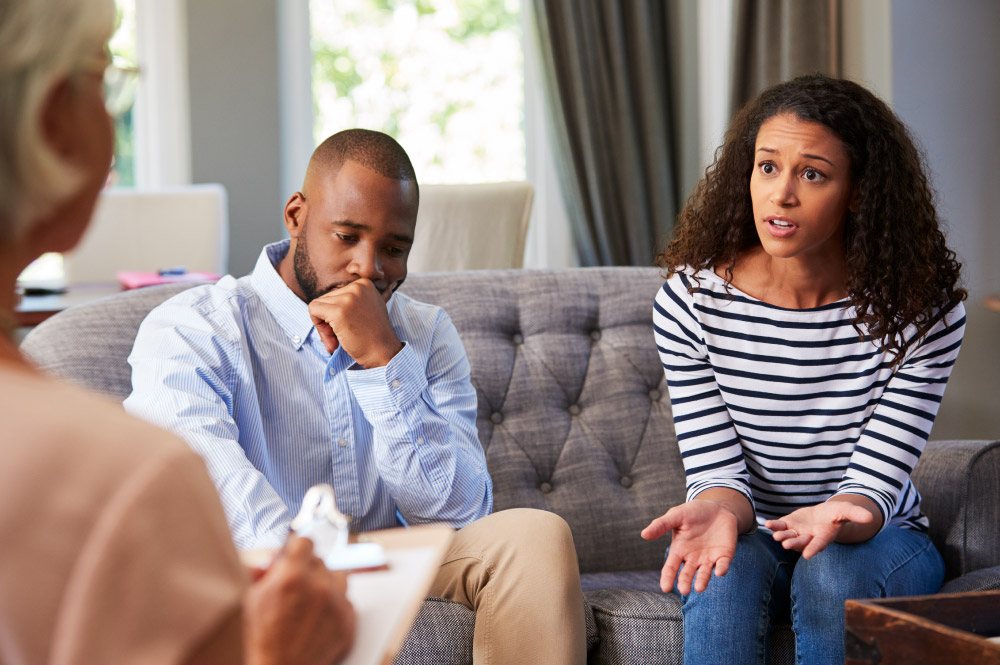
What Really Happens During Couples Counseling
Couples therapy gets a bad rap. People often see it as a sign that you are one step away from a breakup or divorce. It can also feel mysterious and daunting. You may find yourself wondering, “What actually happens in the room (or now, on the Zoom call)? Is it just going to be a repeat of our worst arguments? Will the therapist yell at me and tell me I’m an asshole? Is it worth the time and money?”
Thankfully, the perspectives on couples therapy have begun to change thanks to podcasts like Esther Perel’s Where Should We Begin? which allows us to listen to actual therapy sessions. The pressures of the pandemic have pushed many people into relationship therapy, which is also helping to shift the perspective that its usefulness is only in times of crisis.
I’m a firm believer that everyone can benefit from relationship therapy because, let’s be honest, no one teaches us how to be in relationships! Actually, let me rephrase that…no one teaches us to do relationships WELL! And relationships matter a whole hell of a lot—even to our physical health—so it behooves us to do them well.
I don’t know about you, but jumping into unknown scenarios kind of intimidates me. How’s about I make it a little less scary by breaking down what really happens in couples therapy for you? I can’t tell you what it’s like to be in every couples therapist’s office, but I can tell you what it’s like at my practice.
The Process
Getting Started
I know that just making the call can feel super awkward! All you have to do, though, is call and say that you are interested in some relationship therapy. If you have specific ideas about a type of therapeutic model that interests you, the training of the therapist, or an approach you prefer, now is a great time to mention it. It is unlikely you will reach a human (therapists can rarely answer their phones because they are in sessions all day, and trust me, you don’t want a therapist that answers their phone during sessions!)
Once we know you are interested, our intake coordinator will contact you. Her role is to get some general information from you about what you are looking for and logistical things such as days/times that work best for scheduling. You don’t need to go into every detail about your relationship issues. Still, it’s helpful to have a brief understanding of what’s going on to determine if our practice is a good fit (we aren’t for everyone) and which therapist will be a good match.
Why would a practice not be a good fit? When there are active, severe, and untreated substance abuse issues and/or abuse. Couples therapy, in general, is contraindicated when these things are happening. It’s not that people struggling with these issues don’t need or deserve help; it’s just that these are not our areas of expertise, and jumping into relationship counseling without these issues being well-managed can make things worse.
The intake coordinator will put you in touch with one of the therapists in the practice. They will usually email to set up a brief phone conversation to introduce themselves, answer any questions you might have, and schedule your first appointment. You will then receive an appointment confirmation with a link to a client portal where you can input all of your contact information, insurance (if appropriate) and read and sign the informed consent document. This basically tells you what the therapy process is, practice policies, and what you can expect. Then you sign it, indicating that you are there under your own free will and are consenting to treatment.
The First Couples Therapy Session
I think of the first appointment as a “getting-to-know” you session. I usually start by going over the policies outlined in the consent form in detail to make sure that it is clear and answer any questions. Then I talk about how I think about couples therapy and how I work. I explain that I am a collaborative therapist, and I am there to serve as a guide on the issues that are important to the clients. However, I do have some background and expertise, so I may offer suggestions on useful places to focus our energies. I also let people know that I welcome feedback—good, bad, and otherwise. It is super helpful to the overall process because I learn a ton about what’s going on based on what people like and don’t like about therapy, and it helps me guide the work in a way that is the most beneficial to the clients.
I always let people know that they are not committed to me for life, nor me to them because we had the session. The most consistent research about therapy is that it is most effective when the client and the therapist have a good relationship. Therefore, I let people know that if they don’t feel like I am the right fit for them, I will be happy to give them a referral—no harm, no foul. I also let them know that we will reassess fit after six sessions if we all agree to move forward. It doesn’t benefit anyone to keep working together if my expertise doesn’t match their needs or if we are not progressing.
One of the most important things I let people know in the first session is that I swear…a lot. I always tell them that I can reign it in if they would prefer. So far, no one has taken me up on it.
From there, I’ll want to hear from each person about what brought them to therapy. Sometimes the answers are the same. Other times each person has a very different perception from the other about what the issues are. Even the disagreement helps me to understand where the couple is in their relationship.
If we have time (50 minutes goes quickly!), I’ll ask about their current lives (e.g., What do you do for work? For fun? Any kids? If so, how old?); relationship history (e.g., How did you meet? What drew you to each other? How long have you been married?); and when was the happiest time in your relationship. Couples who are in a very, very bad place often can’t even remember a happy time, ever. Couples who are in a bad place but not so far gone can usually recount some happy moments even if they were in the past.
Here’s what you don’t find in the first session: JUDGMENT. It is a really weird experience to enter into a conversation with someone you hardly know and start sharing all the most intimate details of your life. As hard as it is to believe, we’re not judging you. As therapists, we deeply understand that virtually all human behavior has some explanation for why it is happening. That is not an excuse for bad behavior. If you have a therapist who is trained specifically in systemic or couples therapy (which is who is best to see for this type of work), they will also understand that what’s happening in the relationship is a dynamic that is reciprocal and created over time. (You can get more info about these dynamics here and here.) If your therapist appears deep in thought, you can trust they are thinking about the best way to help you and your partner get unstuck and not that you are a bunch of jerks.
Couples Therapy After the First Session
The remaining sessions will dig in more deeply to the issues brought up in session #1. It’s typically a bit of a Pandora’s Box, and the thing that brought you in is linked to several other underlying things. That’s okay! We are all complicated creatures! And given that the research says most couples wait seven years before coming to therapy, there is usually a lot of shit piled up that we need to sort through.
I frame the couples therapy work we do in these subsequent sessions into three phases:
- Phase 1: Triage and de-escalation – The focus is on quieting the noise and making things feel a little less miserable. We will take a fairly tactical approach and explore communication styles and patterns and new ways of doing things. Total commitment to the process is critical here if the clients want to feel a difference. If you never change any of the things we discuss, that is cool with me, but know that things will continue to feel shitty. I consider myself a good therapist, but I’m not a magician. Some couples stop after this phase. They feel better enough, and that’s what they wanted. This is a perfectly fine choice.
- Phase 2: Family of Origin and Lived Experience Exploration: This is when we really dig into things to get to the root of the issues. This is also where people may think the cliché versions of therapy on TV start to happen (i.e., “Are you going to ask me about my daddy issues? I don’t hate my mom if that’s what you’re wondering.”). I’m not mining for trauma here when I ask about your early life. Even the most healthy families have patterns of dynamics, and guess what, you are repeating them in your relationship whether you think you are or not. Understanding the “why” can greatly help to make sustainable changes to a relationship. Family of Origin is the longest phase by far, and it can be the one that gets uncomfortable. However, clients often report how profoundly impactful and empowering it is too.
- Phase 3: Maintenance: Couples reach this phase when they have made significant, sustained changes in their relationship, and they can articulate how they and their relationship function differently. For the most part, things run pretty smoothly, and they can reset when necessary, but from time to time, they need a check-in. At this point, we may reduce the frequency of our meetings to every few weeks, once a month, or even just a couple of times a year.
These phases are not linear and can repeat. If a crisis or major life transition happens, couples may find themselves back at Phase 1. I can tell you that A LOT of couples I have worked with near or in Phase 3 or who completed their therapy with me years ago found themselves back at this point during the pandemic.
When Does Couples Therapy End?
The therapy ends for many different reasons. Sometimes it’s after the first session if the fit isn’t right, or sometimes that becomes clear after the sixth. In some cases, one or both partners decide they don’t want to participate anymore. I see this most frequently when the impetus for coming in is to “check the box” of therapy before initiating a divorce, but the decision to end the relationship has actually already been made.
I will initiate the end of the therapy with couples when progress has stalled completely for some time. Now, it is a very normal part of the therapy process to have moments of stagnation, but extended periods of this indicate that something else is happening. I will have a conversation with couples to try to identify, together, what seems to be getting in the way. Perhaps the couple is overwhelmed by guiding their children through homeschooling, work, and a pandemic and simply don’t have the mental bandwidth to do the work required to repair the relationship. That is toooooootally okay! We all go through periods when this is the case. Other times though, the lack of progress can signal issues with a commitment to the process. Also okay, but at this point, I encourage a break so that the partners can reassess whether they want to continue. The reason for this is that, over time, therapy can do more harm than good if you are just rehashing conflict over and over without healing or moving forward.
The ideal way to end couples therapy is when the clients come to me and say, “we’ve made a lot of great changes in our relationship, and we think we are ready to tackle things on our own” (or some version of that). I always tell my clients that I am working towards putting myself out of a job. I want them to take what they have learned and incorporate it into their lives in a way that is the most meaningful to them. I genuinely believe that all of my clients have the capacity to do so.
Are You Ready to Try Couples Therapy?
If you are suffering in your relationship and can’t seem to figure a way out, you don’t have to go it alone. I do this job because there were many times in my own life that I felt desperately stuck and wished I had someone to guide me through it. I felt terrible about myself and my marriage and thought I was supposed to know how to change things. I wasn’t, and neither are you.
Call us. We don’t bite.
About the Author: Kate Engler






I like that you pointed out the importance of considering couples therapy when you can’t seem to figure a way out when suffering in your relationship. My husband and I will then consider undergoing
couples therapy sessions as soon as possible. We have not been in a healthy relationship for the past 3 months due to endless arguments, and I am afraid that our children have started getting affected. We will be sure to do your tips to save our marriage.
Thank you for explaining that the first call is a great time to mention if you have any specific ideas about the training of your therapist or a specific approach that you prefer. My cousin has been talking about wanting to get some couples’ therapy with her husband and is really nervous about making the first call. I’ll be sure to mention this to her so that she can have the best chance of finding someone whose approach will work best for them.
Yes, Couple therapy is worth it. Last year I face some serious issues in my married life and it lead our relationship to an almost a dead end. Then someone suggests to I get a therapy session from a well-known therapist and now we are completely fine and happy and living together happily.
I found it interesting when you described couples therapy’s first session and how it’s used to get the patients and therapist known better. Recently, my wife and I have been fighting for everything, and I believe it’d be good for us if we talked with a professional, so I’ll suggest this to my wife and share your tips too. Thank you for the advice on talking to a therapist and making sure they’re fit for you before moving on with therapy.
Taking a break in a relationship can be beneficial in providing time for introspection, growth, and reflection. It can also allow for a better understanding of personal needs and desires. However, it is important to establish clear boundaries and expectations before taking a break to prevent misunderstandings and potential harm to the relationship.
I appreciated your description of the initial session in couples therapy, which serves as an opportunity for the therapist and patients to become better acquainted. Given recent conflicts in my marriage, I am considering suggesting therapy to my wife and will share your tips with her. Thank you for highlighting the importance of finding a therapist who is a good fit before beginning therapy.
Your description of the first session of couples therapy and how it is utilized to get to know the patients and therapist better caught my attention. I think it would be beneficial for my wife and I to speak with a professional since recently, my wife and I have been arguing about everything. I will recommend this to my wife and also share your advice. I appreciate your recommendation to chat with potential therapists and see whether they are a good fit for you before beginning treatment.
Your article is a testament to your commitment to promoting healthy relationships and overall well-being. Thanks for sharing valuable information.
Thank you for sharing your insightful experience of the initial session in couples therapy. It’s crucial to establish a strong foundation in therapy, and your description resonated with me. Like you, I’ve been facing some conflicts in my marriage recently, and after reading your comment, I’m seriously considering suggesting therapy to my wife as well.
Your emphasis on the importance of finding a therapist who is a good fit before starting therapy struck a chord with me. It’s vital to have a therapist who can create a safe and supportive environment for both partners to open up and work through their issues. Your tips will undoubtedly help guide us in the right direction as we search for a couples therapist.
Great content! I hope that the author will post more
I like that you emphasized the need to take couples counseling into account when you’re having marital problems and can’t seem to figure out a solution. Then, if feasible, my husband and I will look at starting couples counseling. Due to our ongoing disagreements over the last three months, our relationship has not been healthy, and I am worried that it has begun to influence our children. To salvage our marriage, we’ll be sure to follow your advice.
I appreciate how you normalize the ups and downs of therapy—it’s so easy to feel like we’re “failing” when progress slows, but your perspective reframes that in such a compassionate way. I especially liked the part where you said therapy can start to do more harm than good if it just becomes a cycle of rehashing conflict without healing. Thanks for sharing this behind-the-scenes view of therapy—it’s incredibly helpful and humanizing.